
We create biodegradable materials using apple pomace.
POWER TO THE POMACE
Apple pomace is the by-product of apple juice or cider pressing – a solid, fibrous residue made of skins, pulp, and seeds.
A Matter of Fruit repurposes this valuable resource into biodegradable and purely plant-based films.
Our goal: to reduce microplastics, microfibres, and dependence on petroleum-based plastics — all while actively contributing to a circular economy.
By sourcing our raw material from regional juice producers, we aim to reduce long supply chains as well as strengthen our local farmers.
The Material

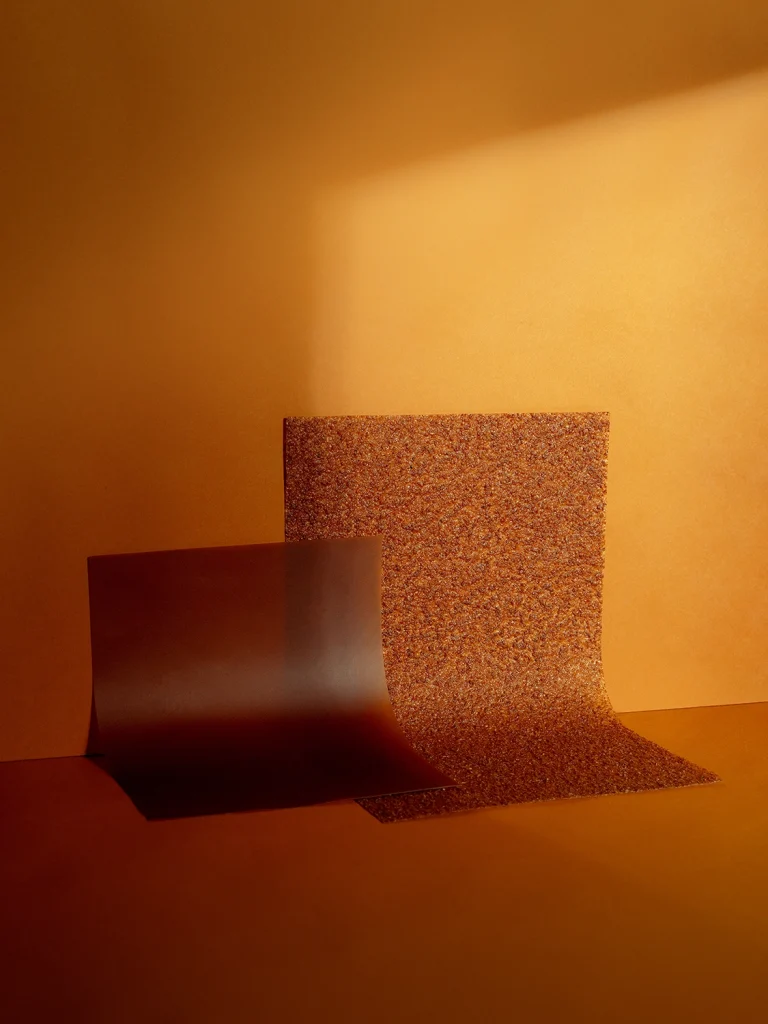
Our material carries a unique character that combines a natural aesthetic with performance.
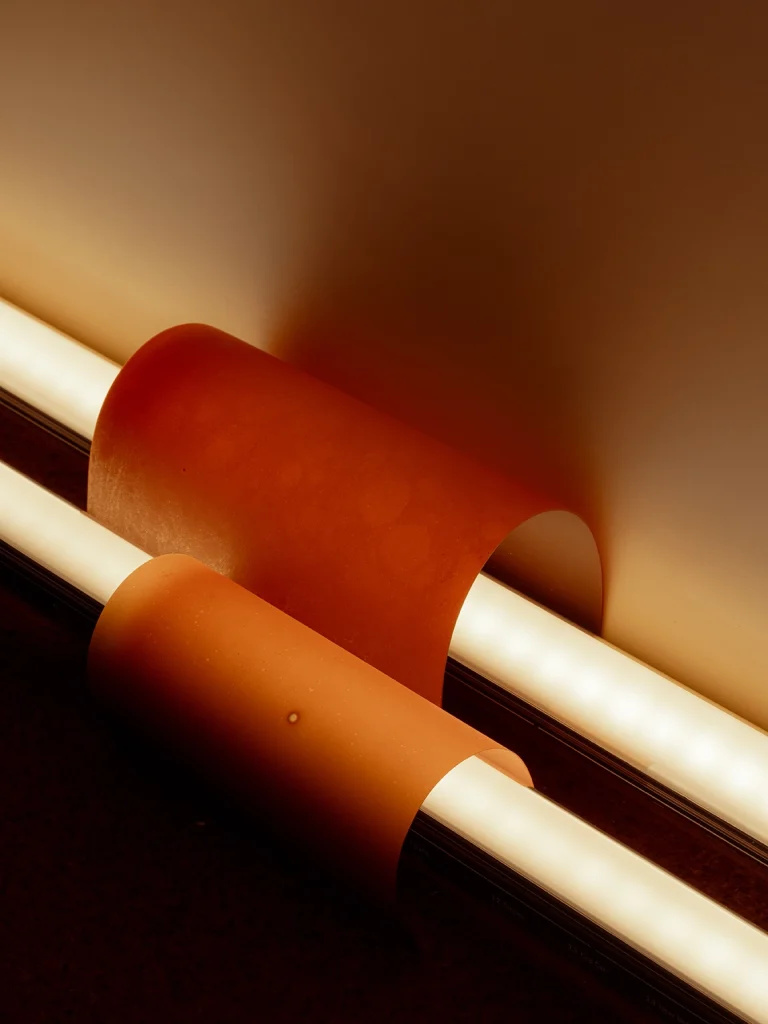
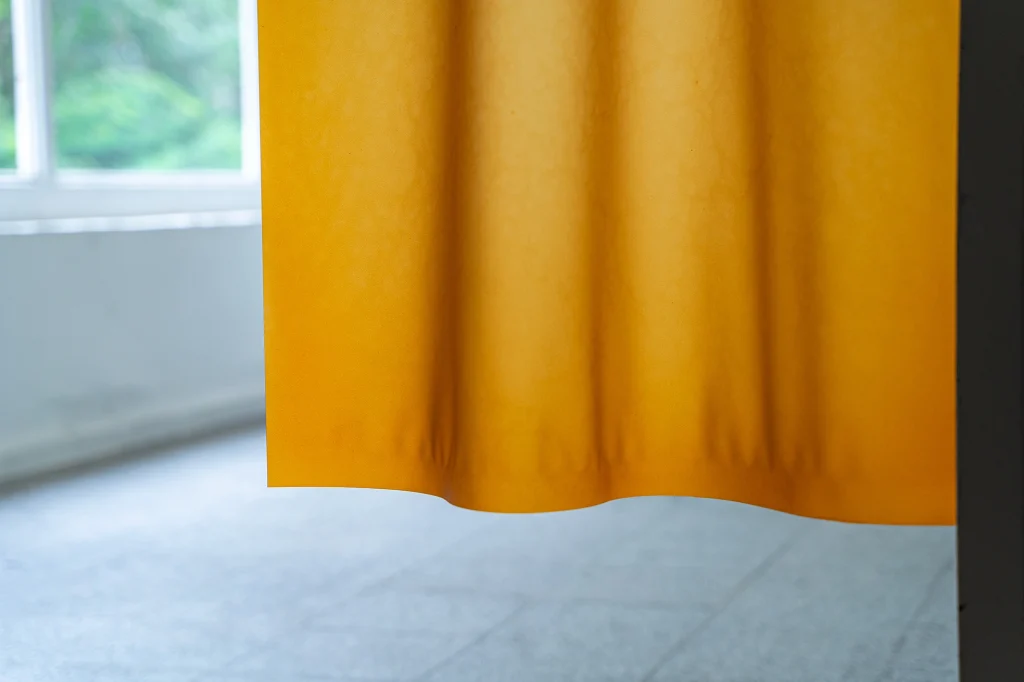
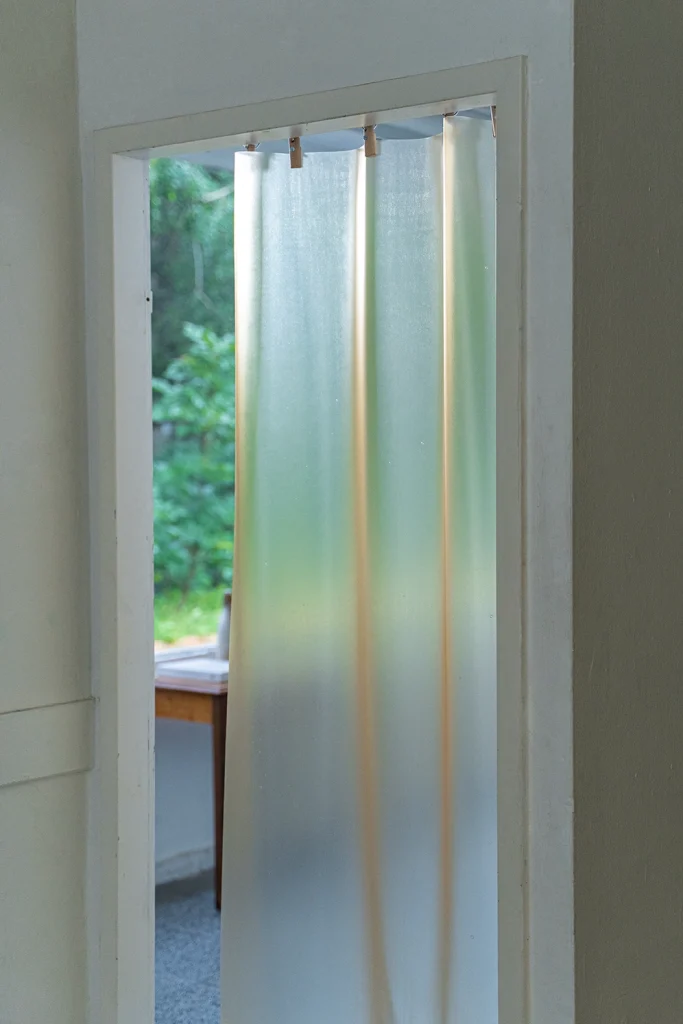
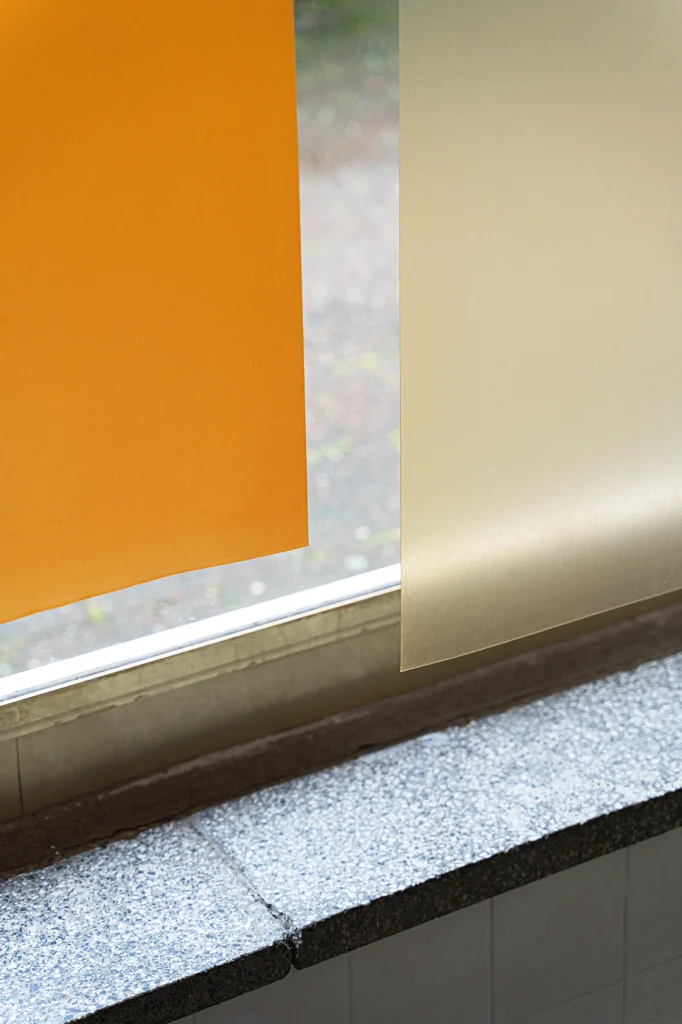
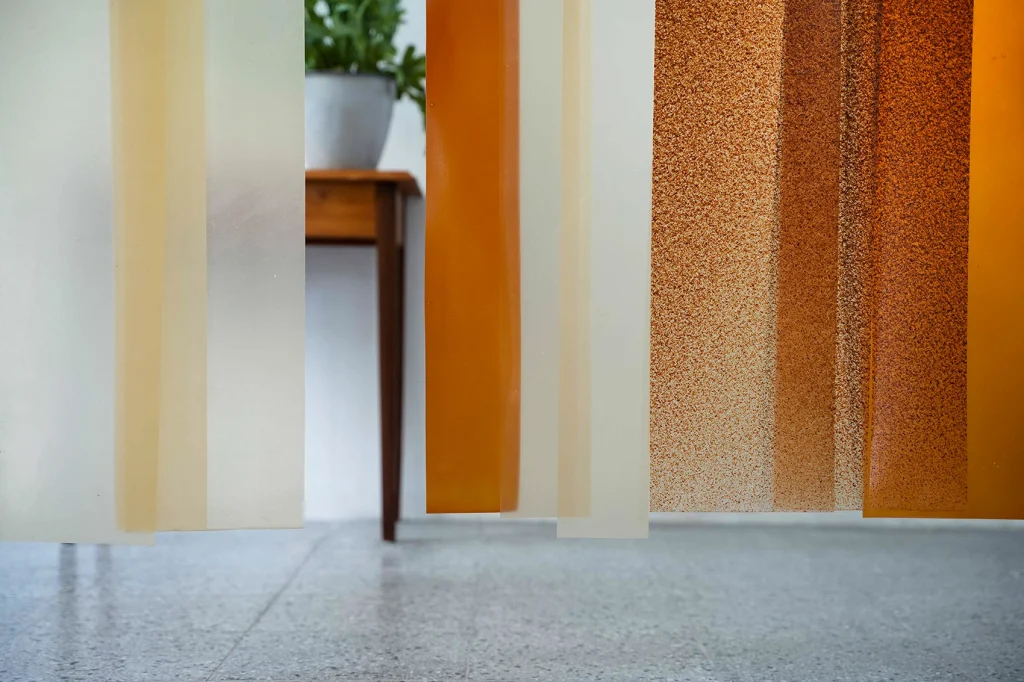
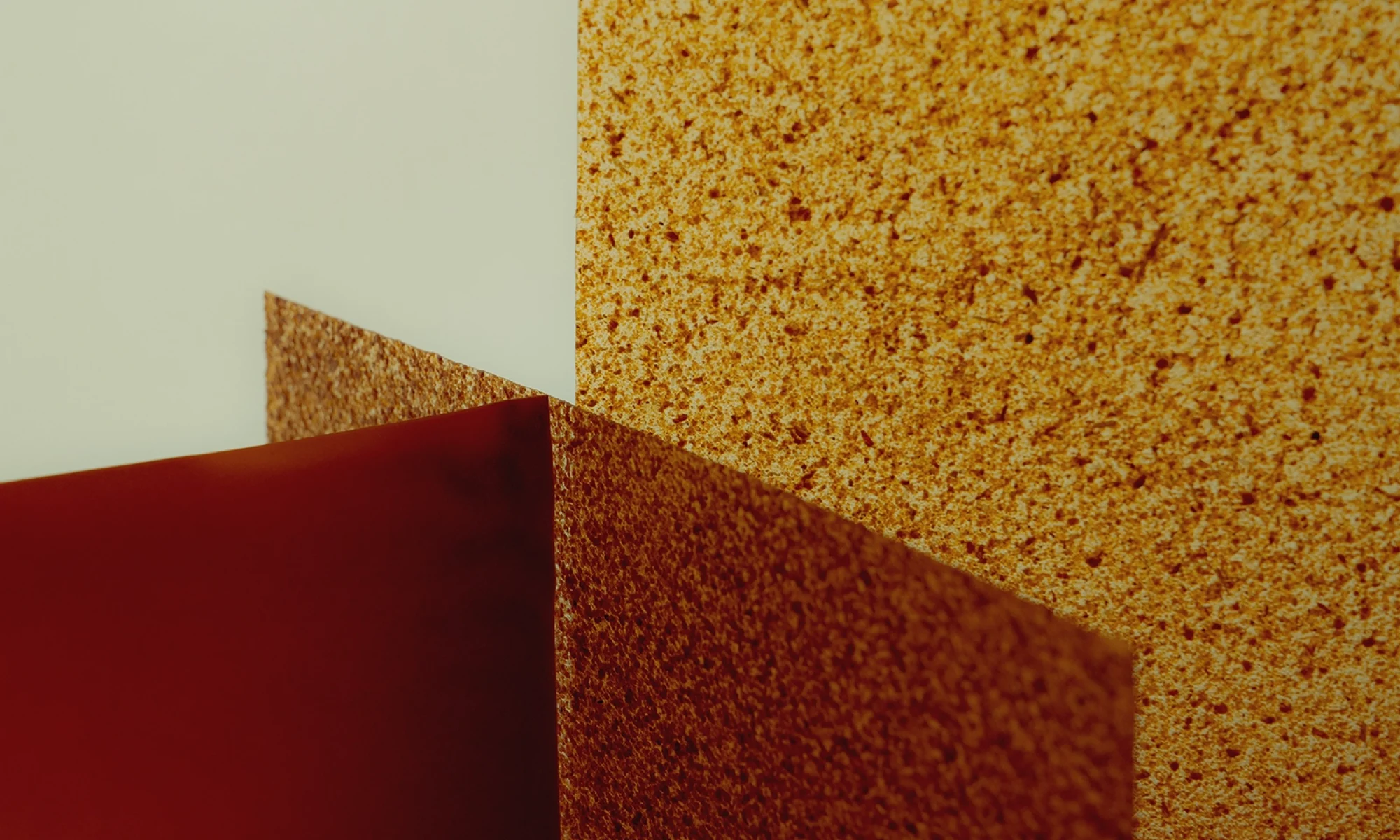
Recyclable, biodegradable, flexible, with a natural smell and touch, reflecting the seasonal variations of each apple harvest. It can be translucent or opaque, smooth or textured, and is highly versatile: printable, shapeable, sewable, and even suitable for laser cutting.
The material can be used across various industries with a current focus on the interior architecture as sunlight and privacy protection. After further development applications will open up to new areas such as leather alternative and environmentally-friendly packaging solutions.
The Team
We are a Berlin-based interdisciplinary team, bringing together expertise in regenerative material design, in agricultural (by-) products and in shaping circular and environmentally friendly business strategies. Every decision is guided by respect for people, nature, and the planet — from apple growers and juice production to the finished material.

Verena Brom
Co-Founder
Strategic Lead,
Material Design &
Product Development

Nuno Carreiro da Costa
Co-Founder
Production,
Tech Development &
Product Design

Leonie Streng
Production &
Resource Management

Kao Danpan
Business &
Brand Development
Areas of Application
Our current focus is on applications within the interior design and architecture sectors. The films are designed and engineered for use in products such as blinds, panel curtains, vertical louvres, and lampshades — offering a non-toxic, biodegradable alternative to conventional synthetic textiles. This not only supports healthier indoor environments but also aligns with growing industry demand for sustainable material sourcing and circular product design.